
The telemetry-native AI SRE.
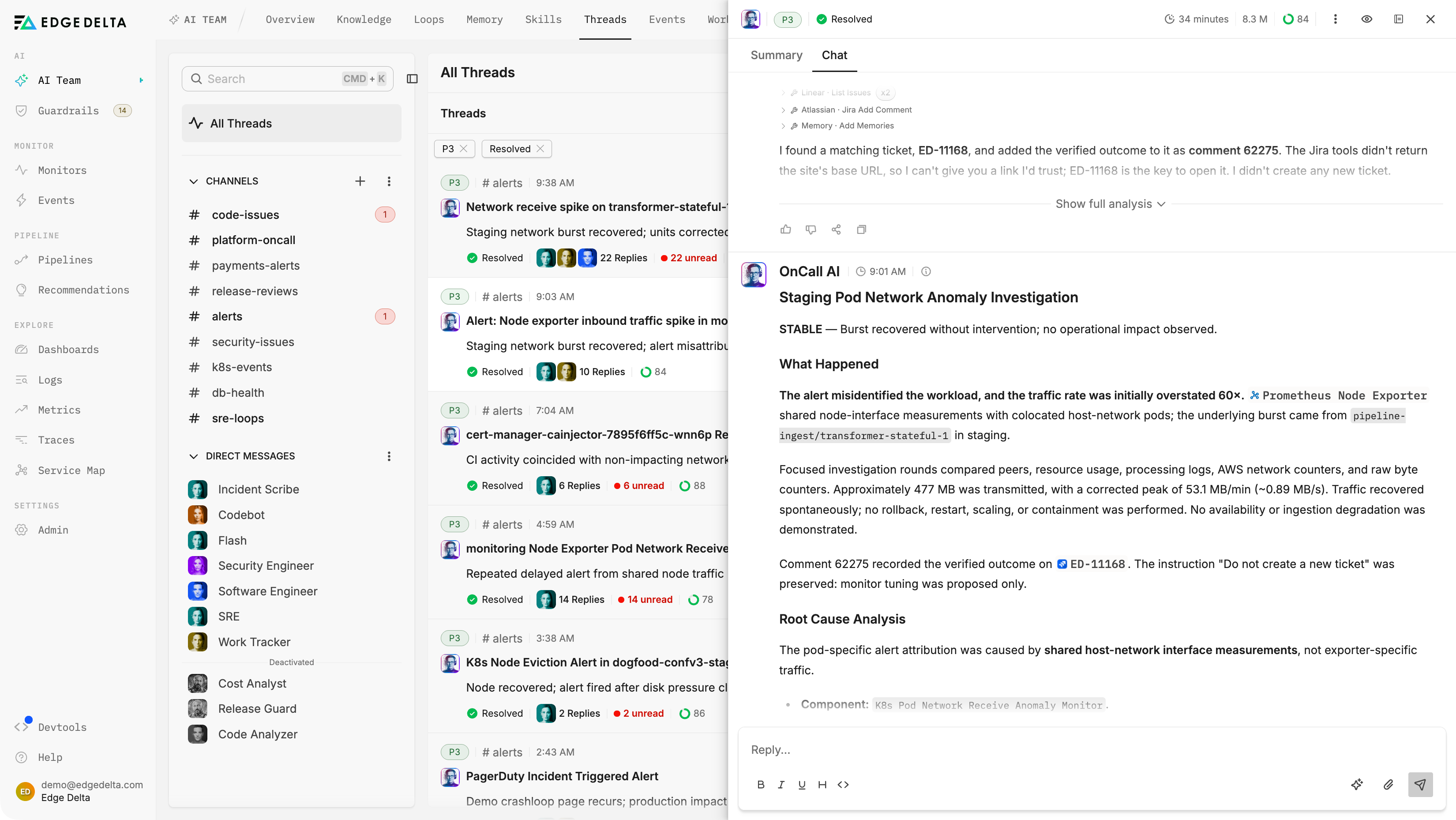
What an AI SRE does.
An AI SRE is an AI agent that performs the work of a site reliability engineer: it detects production issues, investigates them across logs, metrics, traces, and deployment context, identifies the root cause with supporting evidence, and remediates with approval and verification.
01 · Detect
Detection starts in your telemetry.
Monitors learn baselines from your own traffic instead of waiting for hand-set thresholds. When a new error template appears or a known pattern spikes, the anomaly becomes an alert with the query, time window, and monitor history attached, and the on-call teammate picks it up in the same minute.
02 · Investigate
The investigation is already running when you get paged.
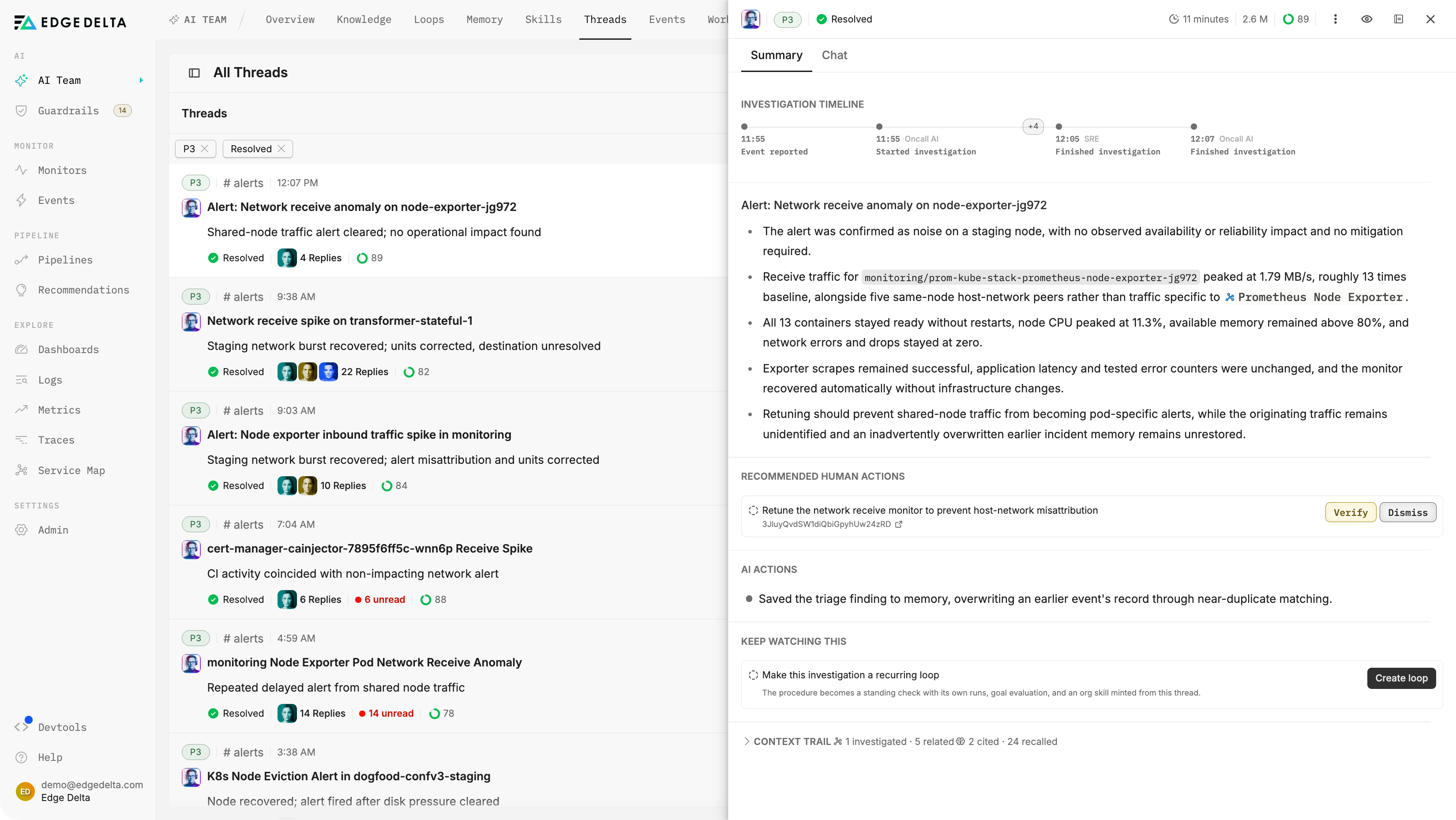
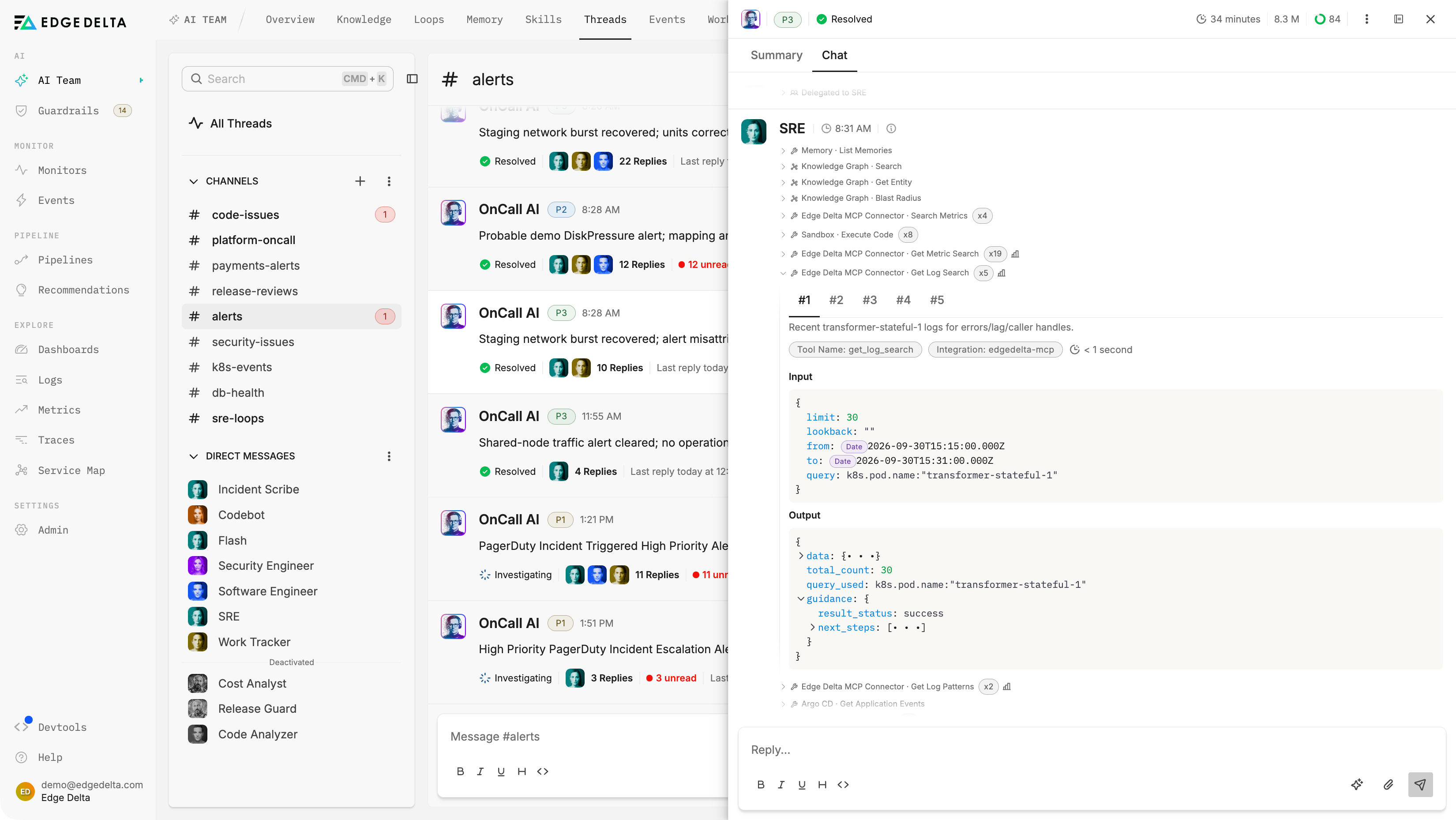
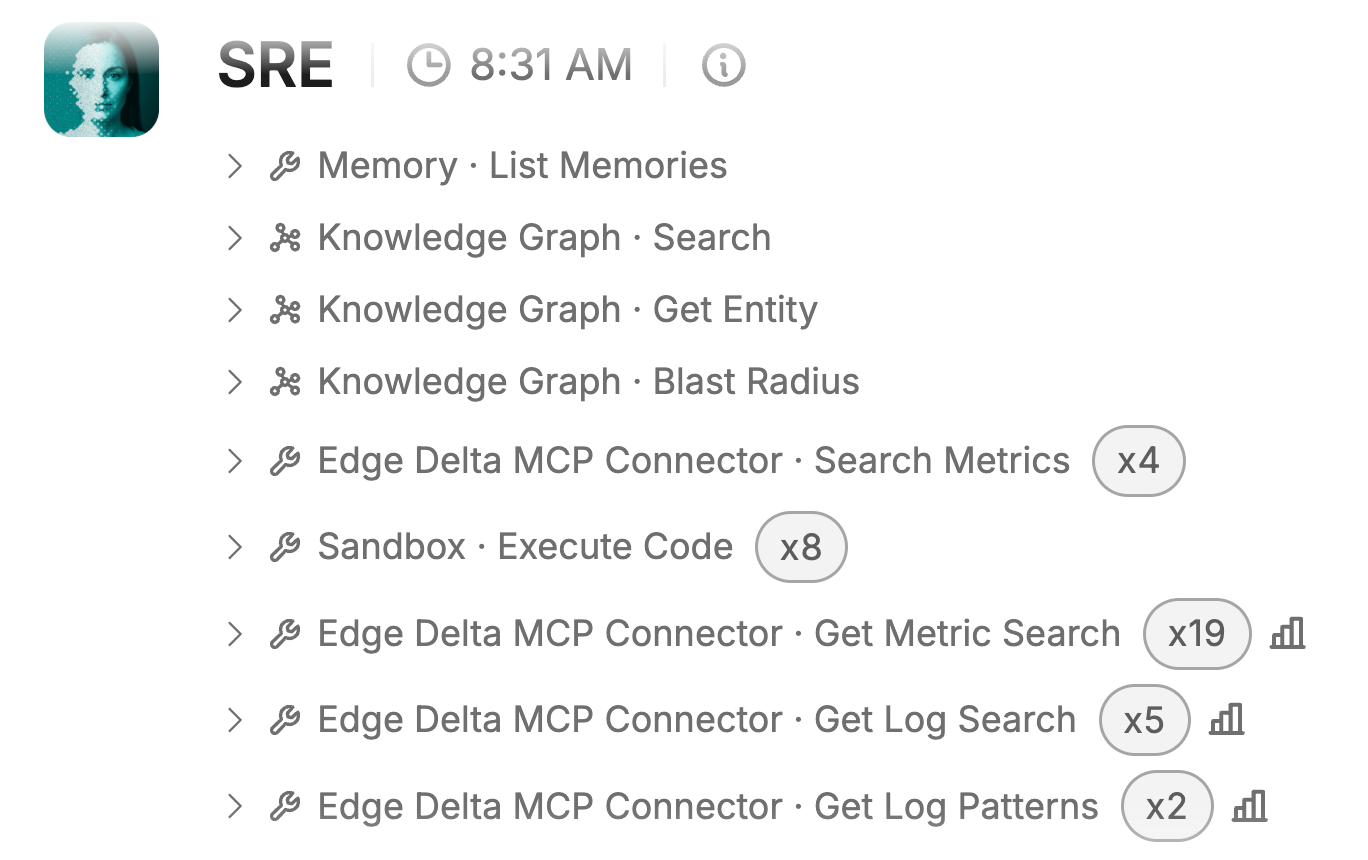
The SRE Teammate groups related alerts into one issue, then queries logs, metrics, traces, and Kubernetes events around the alert window. It pulls deployment history and prior occurrences from Production Context, delegates to other teammates when the trail crosses domains, and records every query it ran.
03 · Reason
The root cause shows its work.
The teammate forms competing hypotheses and tests them against the data, discarding the ones the telemetry rules out. What's left is a root cause with the reasoning chain visible step by step, so an engineer can audit exactly how the conclusion was reached.
04 · Act
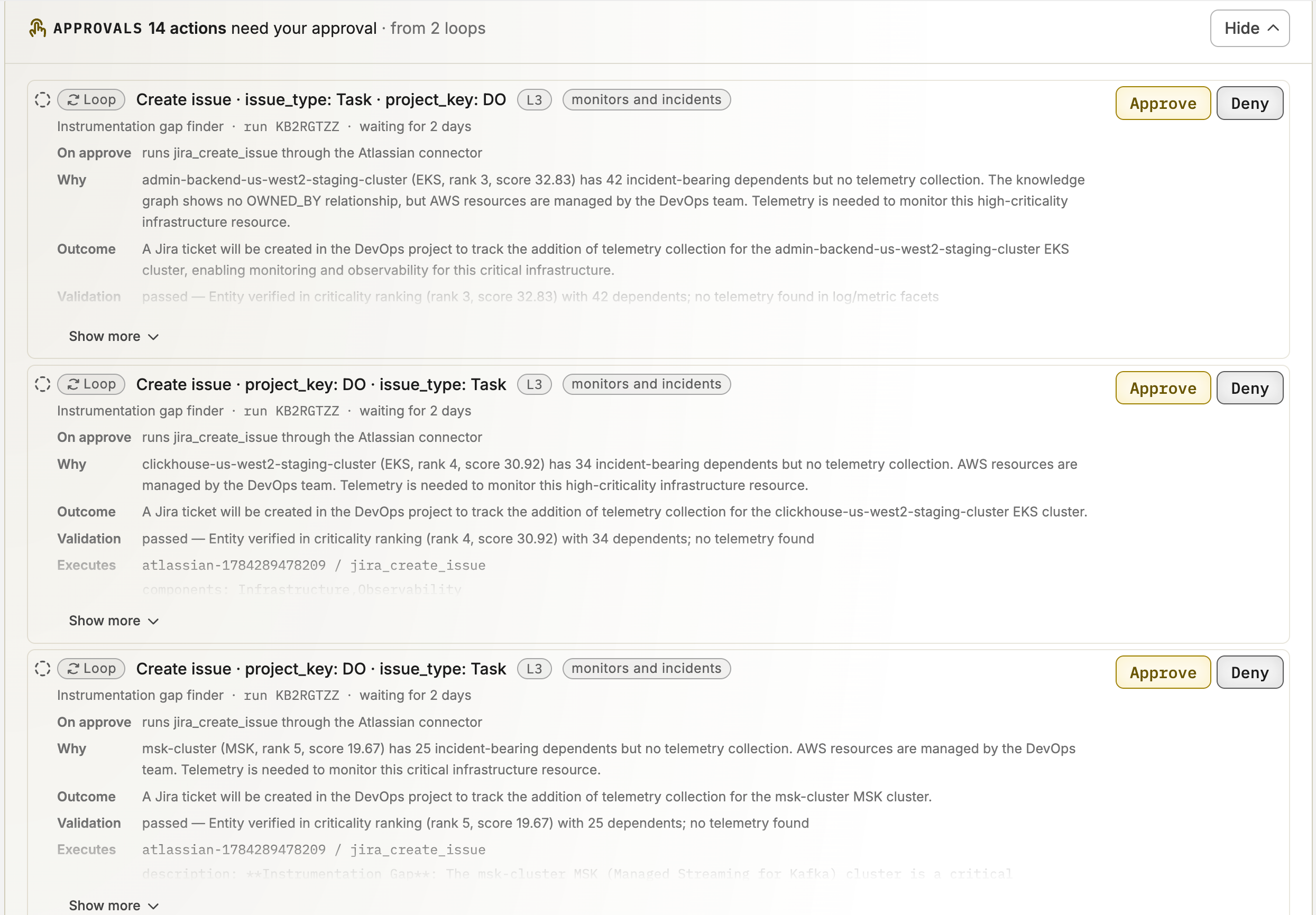
Every write waits at a gate you define.
By default, teammates draft changes and apply none of them on their own. A proposed remediation appears under needs-approval with the change it wants to make, and it runs when a human approves it or when it matches a playbook you pre-approved through deterministic Workflows. Completed actions stay on the issue, down to the pull request that carried the fix.
05 · Verify
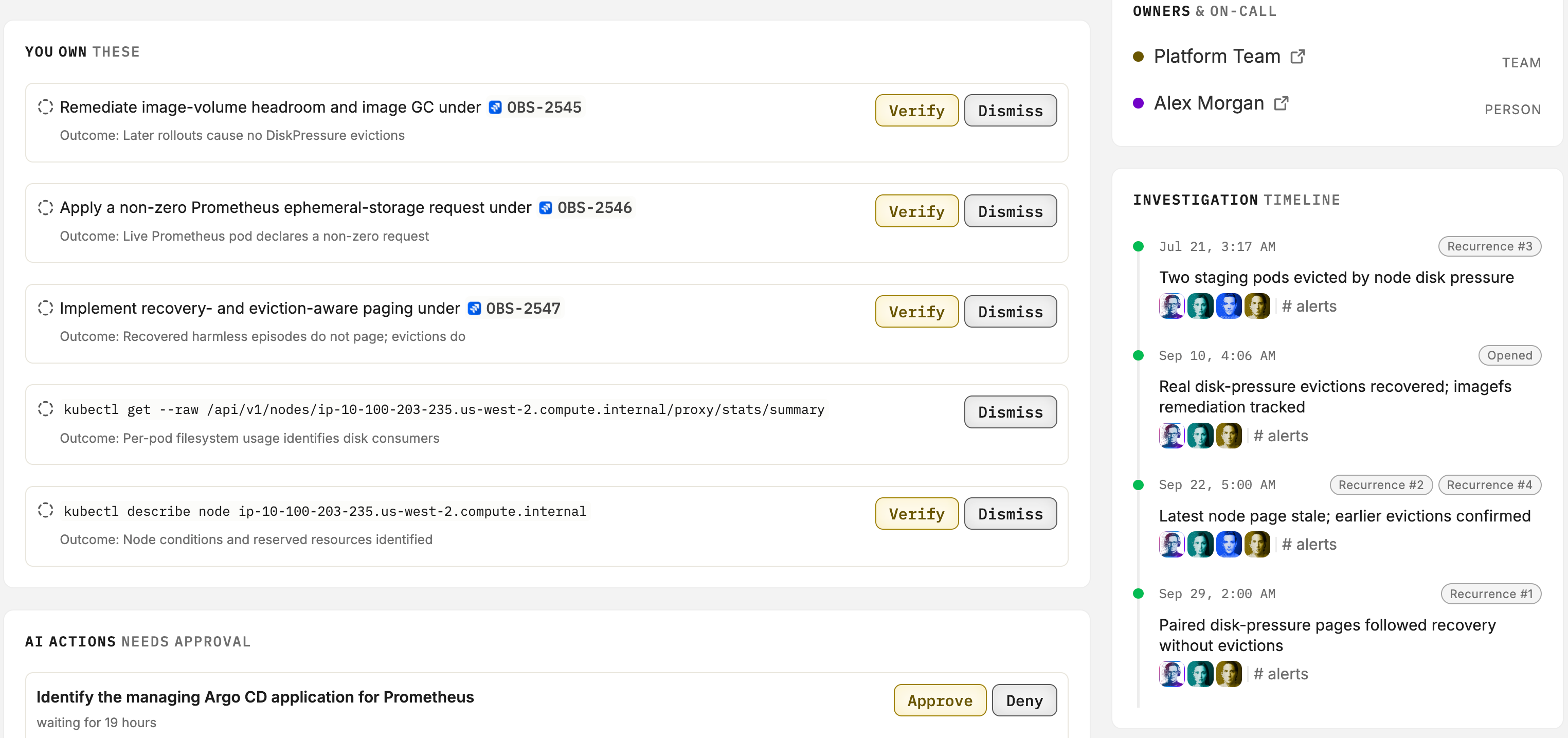
A fix is verified in the telemetry, or the issue reopens.
Each action carries a verify condition, the pod events that should clear or the error pattern that should stop. The teammate checks it after the change ships, comparing telemetry from before and after, and the issue stays open until the data shows the incident is over.
06 · Learn
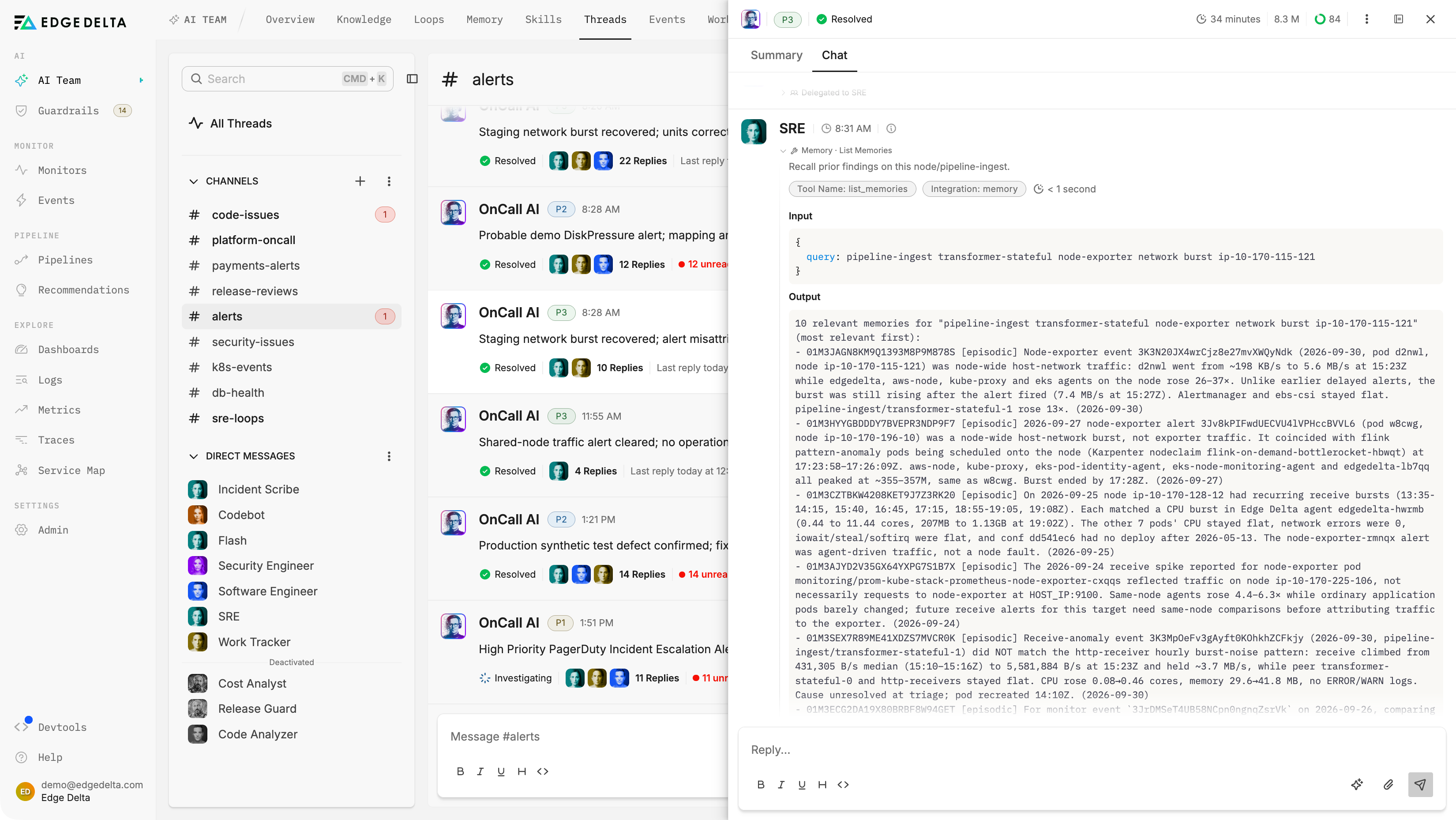
Each investigation leaves a record the next one uses.
Every resolved issue joins Production Memory: the alert, the root cause, the fix that worked, and how the monitor behaved. When a similar signal appears later, the teammate pulls that record before doing anything else. Noisy monitors get tuned this way, and repeat incidents run shorter.
Reasoning runs inside the pipelines.
Most AI SREs begin work after an alert fires and query observability tools from the outside. Edge Delta's AI Teammates reason directly over the telemetry layer, on the live logs, metrics, traces, and events flowing through its Telemetry Pipelines, so they hold Production Context before an incident starts.
The same context serves the SRE, security, and software engineering teammates. One incident investigated by the SRE Teammate becomes history the security and code-review teammates can use, which is the path toward Autonomous Production.
The AI SRE works on a team.
Four teammates ship out of the box and run on the same platform, with shared Production Context and one approval model. Custom teammates scope to whatever job you define.
AI SRE Teammate
Triages alerts, runs root cause analysis, and proposes fixes the moment a monitor fires.
Explore →AI Security Engineer
Reviews pull requests for vulnerabilities and watches production for suspicious activity.
Explore →AI Software Engineer
Explores your codebase, reviews code in depth, and opens targeted fixes as pull requests.
Explore →AI Work Tracker
Opens and updates tickets when work is missing or unowned, and links them back to the source.
Explore →The results are public.
Where to check the work before you rely on it.
The agent benchmark
Scenario-based evaluation of the AI Teammates against real incident classes.
Explore →Same bug, four minds
One production bug handed to four coding agents, run and scored side by side.
Explore →How we evaluate AI agents
How we score the teammates, and what building the evals taught us.
Explore →Frequently asked questions
What teams ask before putting an AI SRE on call.
Is Edge Delta an AI SRE or an observability platform?
Edge Delta is a telemetry-native AI SRE. It is built on the telemetry pipeline architecture the company has run in production for years, which is what lets its AI Teammates reason over live data instead of querying tools from the outside. Observability is the architecture underneath; the AI SRE is what runs on top of it.
What happens when an alert fires?
The SRE Teammate groups related alerts into one issue, queries the telemetry around the alert window, tests hypotheses against the data, and posts a root cause with its evidence and a proposed remediation. An engineer opens the issue to a finished investigation rather than a raw alert.
Can it take actions in production on its own?
Only within limits you set. Teammates start at the Propose trust level, where they read freely and draft changes, every write action waits for a named approval, and scheduled work runs through playbooks you pre-approved. Autonomy expands action by action as the track record earns it, and you can revoke any grant at any time.
How is Edge Delta different from other AI SREs?
Most AI SREs connect to observability tools from the outside and start querying after an alert fires. Edge Delta runs on the telemetry layer itself, so its teammates already hold the baselines, deployment history, and service context an investigation needs. That is also why detection can start before a human-written alert exists.
What is Production Memory?
The record every investigation leaves behind: what fired, what caused it, what fixed it, and how the monitor behaved. Teammates retrieve it when similar signals appear, so conclusions from past incidents carry into new ones.
Will an AI SRE replace our on-call engineers?
No. It absorbs the triage, correlation, and first-pass investigation that consume an on-call shift, then hands the engineer a finished investigation to review. Production decisions stay with people.
How long does it take to see the first result?
Under an hour in most stacks. Connect your sources, activate the SRE Teammate, and the first investigated issue arrives with root cause and evidence attached. Starting is self-serve and needs no credit card.
New to the category? Start with What is an AI SRE?, or go straight to the AI Teammates themselves.
Put an AI SRE on call
Connect your stack, activate the SRE Teammate, and open your first investigated issue within the hour.